
That gym membership might be worth every penny, or it might be quietly billing you for workouts you keep postponing.
The honest answer is you may not need a gym membership, but that does not mean gyms are outdated or useless. A gym can be the right fit if you love heavy barbells, group classes, childcare, personal coaching, or the energy of training around other people.
But if your usual workout is a few machines, some bodyweight exercises, and a treadmill session, a compact home setup may give you more usable fitness for less time and money.
Let’s break down the real trade-offs without turning this into a “gyms are bad” rant.
Key Takeaways
- Gyms are still valuable for specialized equipment, classes, coaching, childcare, and social accountability.
- A membership at $60 per month costs $720 per year before enrollment fees, add-ons, or cancellation friction.
- A practical home gym can start with a small open floor area, a safe anchor point, and versatile home exercise equipment.
- Suspension fitness straps scale resistance through body angle, so one setup can work for beginners and experienced athletes.
- NOSSK offers several options, including TNT PRO, GYM PRO, HOME, Cyclone, RT-17, and TWIN PRO, plus the FlexEx hand exerciser.
- The best setup is not the fanciest one. It is the one you will actually use consistently.
The Gym Is Great, For the Right Person
Before we talk home gyms, let’s give commercial gyms their due.
Keep your membership if you regularly use benefits that are difficult or expensive to reproduce at home, such as:
- Heavy barbells, squat racks, and specialty machines
- Swimming pools, saunas, or large cardio areas
- Instructor-led classes
- Personal training
- Childcare
- A social environment that keeps you accountable
- A clear separation between “home time” and “workout time”
Some people simply train better when they leave the house. That matters. The best fitness plan is the one that fits your personality and keeps you moving.
The problem starts when you are paying for all those features but mostly using a few basic pieces of equipment, and skipping workouts because getting there is a hassle.
The Real Cost of a Gym Membership
The monthly fee is only the obvious part.
Let’s use a simple example:
- Membership: $60 per month
- Annual dues: $720
- Enrollment or annual facility fee: $50
- Occasional add-ons: $10 per month
That brings the first year to:
$720 + $50 + $120 = $890
Over three years, assuming the same pricing:
$720 × 3 + $50 + $120 × 3 = $2,570
Your numbers may be lower or higher, of course. Boutique studios and premium clubs can cost much more. Some memberships also include minimum terms, written notice requirements, annual fees, or cancellation rules that make leaving more complicated than expected.
Then there is the cost nobody puts on the receipt: your commute.
If your gym visit includes a 25-minute round trip and you train three times per week, that adds up to roughly:
- 75 minutes per week
- 65 hours per year
- Nearly eight full workdays spent traveling
That time may be worthwhile if you love your gym. But if the commute is the reason you skip short workouts, home equipment can remove the biggest barrier before you even start.
What Do You Actually Need at Home?
You do not need a dedicated garage, a wall of machines, or a fancy smart system to get a solid workout.
For many people, a useful home gym needs three things:
1. A small training area
You need enough room to:
- Lie down comfortably
- Stand and reach in every direction
- Step forward and backward
- Perform rows, presses, squats, lunges, and core exercises
A clear area roughly the length of your body plus a few extra feet is often enough for a no gym workout. Push furniture aside, roll out a mat, and keep it simple.
2. A safe anchor point
Depending on your equipment, that could be:
- A suitable closed door
- A pull-up bar
- A wall or ceiling anchor installed into proper structural material
- A sturdy outdoor post, branch, or beam
Never guess with an anchor point. Follow the product instructions, check the door and hardware, and inspect straps, rope, stitching, and connection points before training.
3. Versatile fitness equipment
The trick is choosing gear that can do more than one job.
Suspension fitness is useful here because you can train pushing, pulling, squatting, lunging, planking, curling, extending, and rotating movements with the same compact system.
How Body Angle Changes the Challenge
This sounds technical, but the idea is straightforward: change your body position to change how much of your body weight you are lifting.
For an easier row, stand more upright. For a more challenging row, walk your feet forward and lean farther back.
You can adjust movements by:
- Changing your body angle
- Moving your feet closer to or farther from the anchor
- Using two handles or one
- Widening or narrowing your setup
- Slowing down the lowering phase
- Adding pauses and controlled repetitions
That means a beginner and an advanced athlete can use the same kit, but choose different angles and progressions. No weight-stack math required.
A Practical Gym-or-Home Decision Guide
Keep the gym if…
- You use heavy barbells or specialty machines every week.
- You attend classes and genuinely enjoy them.
- Childcare makes your workouts possible.
- You need coaching or hands-on instruction.
- The gym gives you motivation you cannot create at home.
- You have limited space and nowhere safe to anchor equipment.
- You are training for a sport that requires specific facilities.
Go home if…
- Your gym commute regularly causes missed workouts.
- You mainly use bodyweight exercises, cables, light weights, or cardio.
- You prefer short sessions at flexible times.
- You want to avoid another monthly bill.
- You travel often or work unpredictable hours.
- You have a small open area and a safe anchor point.
- You want a low-cost way to lose weight at home through consistent movement and sensible nutrition.
Not sure? Try a 30-day home experiment before canceling anything. Plan three or four short workouts each week. Track how often you train, how long you exercise, and what you actually miss from the gym.
Your answer should come from your habits, not from gym culture, January motivation, or an impressive equipment ad.
Door Anchors and Apartment-Friendly Setups
For renters and apartment dwellers, a door setup is often the easiest starting point.
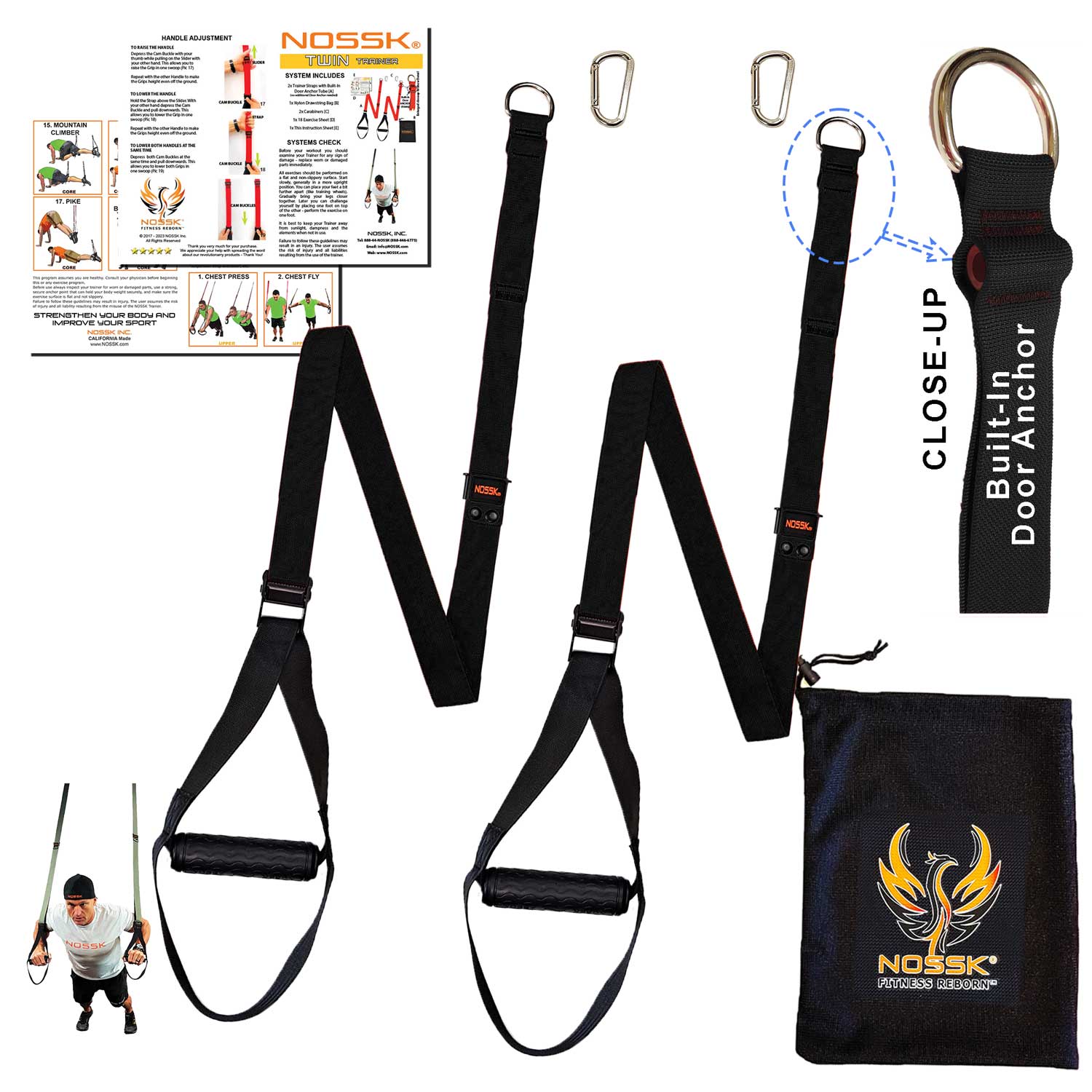
The NOSSK HOME Trainer is the most portable and least bulky option in the lineup. It is lightweight, packs easily, and has a built-in door anchor, so there is no separate piece to lose. It can also be used with appropriate bars, branches, or posts.
The NOSSK TWIN PRO includes two separate straps for narrow or wide setups, making it a strong choice for a home gym that needs more exercise variety.
The NOSSK TNT PRO includes a dedicated door anchor attachment and a Fit Link that adds extra movement and balance demand. Because that setup is less stable, it is better suited to people without balance limitations.
The NOSSK RT-17, uses rope and includes a dedicated door anchor attachment. It is compact, flexible, and a handy option for travel, outdoor workouts, and simple home setups.
For a fixed home gym, consider an installed anchor such as the NOSSK Double Oblong Stud Beam Pad Eye Anchor System. Install permanent hardware only where appropriate and make sure the mounting surface is structurally suitable.
Apartment tip: Keep the trainer and exercise guide in a small storage bin near your workout area. The fewer steps between you and your first set, the better.
Meet the NOSSK Home Fitness Lineup
NOSSK focuses on high-quality fitness equipment made for real-world use, not gear that sits in a box waiting for a future version of you.
- HOME: The lightest, least bulky option, with a built-in door anchor. Great for apartments, travel, offices, and beginners.
- TWIN PRO: Two separate straps support narrow or wide setups, single-arm work, and a broad range of bodyweight movements.
- TNT PRO: Includes a dedicated door anchor attachment and Fit Link for a more dynamic, balance-focused challenge.
- GYM PRO: A stable dual-strap option for bars, wall hooks, racks, posts, and outdoor anchor points. It is not designed for door use, and no door anchor is included.
- RT-17: A rope-based system with a dedicated door anchor attachment, foam handles, and outdoor versatility.
- Cyclone: A pulley-based option that adds free movement and a more demanding core and stability challenge. It includes a built-in door anchor in its anchor strap.
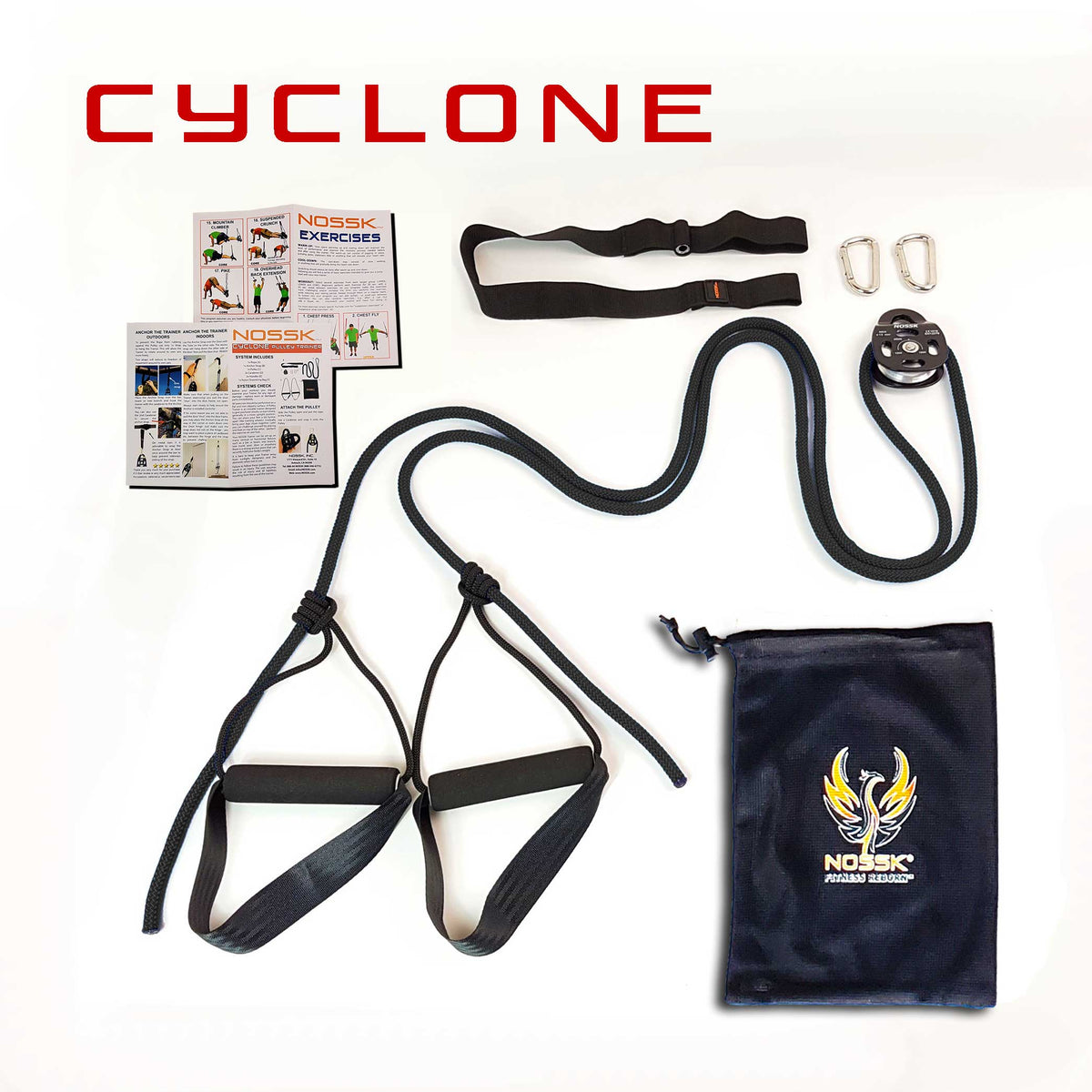
NOSSK trainers are made in-house in California using high-grade US Military Webbing and professional-grade materials. Features include lay-flat handles, comfortable foot loops, exercise guide, carrying bag for easy, compact storage.
You also get NOSSK’s lifetime satisfaction guarantee, helping make the move from a recurring membership to a one-time equipment purchase feel less like a gamble.
Do Not Forget Your Hands and Grip
Your hands are involved in rows, carries, hangs, rope work, and nearly every pulling movement. The FlexEx Hand Exerciser is a useful companion for strengthening and rehabilitating the fingers, hands, wrists, and forearms.

FlexEx is patented and made in the USA. Use it for a few minutes while you are working at your desk, watching a show, or cooling down after a workout. Small, consistent work adds up, especially when your goal is better grip endurance and hand function.
The Bottom Line: Choose the Setup You Will Use
You do not need to choose between being “a gym person” and “a home workout person” forever. A hybrid approach can work beautifully:
- Use home equipment for quick weekday sessions.
- Keep a gym membership for heavy lifting or classes.
- Try gym day passes when you need specialized equipment.
- Train outdoors when the weather is inviting.
Your fitness routine is a marathon, not a sprint. The winning setup is the one that makes it easier to start, easier to repeat, and easier to fit into your actual life.
Build a home gym that is compact, capable, and ready when you are. If that means a NOSSK HOME Trainer by the door, a TWIN PRO in the garage, a GYM PRO on your rack, or an RT-17 in your travel bag, choose the right equipment, and then keep showing up.
Ready to ditch the commute? Explore the full NOSSK Suspension Fitness Lineup to find your ideal portable setup