

You probably notice grip strength when you open a stubborn jar, carry grocery bags, play an instrument, or hang onto a pull-up bar. But your grip may tell you more than whether you can win a friendly handshake contest.
Doctors and researchers increasingly view handgrip strength as a useful biomarker of healthy aging. In plain English, it’s a quick snapshot of how well your muscles and physical capabilities are holding up over time.
That doesn’t mean grip strength is a crystal ball, or a diagnosis. It’s one health signal among many. Still, research consistently connects lower grip strength with a higher risk of mobility limitations, frailty, disability, cardiovascular problems, and earlier death. A Lancet review on grip strength and aging and other systematic reviews explain why clinicians pay attention to this simple measure.
The good news? You don’t need a fancy clinic or a long workout to start building stronger hands, wrists, and forearms. A few small practice sessions scattered through your normal day can add up.
Key Takeaways
- Grip strength reflects more than your hands. It often tracks with overall muscle strength and physical capability.
- Consistency beats heroic effort. A few minutes here and there is enough to get started.
- FlexEx is a patented, USA-made hand exerciser designed to strengthen the fingers, hands, wrists, and forearms.
- It works for all ages and fitness levels, including desk workers, athletes, musicians, seniors, and people in rehabilitation or recovery.
- Grip work pairs well with bodyweight exercises and portable home gym equipment for a complete, practical fitness setup.
Why Doctors Care About Grip Strength
Grip strength is easy to measure with a dynamometer. A device that records how firmly you squeeze. It’s quick, inexpensive, and non-invasive, which makes it useful in primary care, physical therapy, sports medicine, and senior health assessments.
More importantly, grip strength often acts as a stand-in for overall muscle function. Your hands don’t work in isolation. Stronger hands can support daily tasks, lifting, carrying, climbing, using mobility aids, and exercising with confidence.
Researchers have found associations between grip strength and:
- Healthy aging and physical independence
- Fall risk and frailty
- Upper-body and overall muscle strength
- Mobility and quality of life
- Cardiovascular and metabolic health
Let’s keep the wording honest: most of this research is observational. It shows that grip strength and health outcomes are connected, not that squeezing a hand exerciser automatically adds years to your life. Grip strength is best viewed as a health signal, and a useful training target, not a magic longevity switch.
If you’re concerned about a sudden loss of strength, pain, numbness, or weakness on one side, speak with a qualified healthcare professional.
Meet FlexEx: A Simple Hand Strengthener You’ll Actually Use

The FlexEx Hand Exerciser is the hero of this routine because it’s small, portable, and refreshingly straightforward. This patented, USA-made hand strengthener uses individual finger loops to create resistance as you open and extend your fingers.
That makes it different from a traditional squeeze ball. Instead of only training the closing motion, FlexEx helps you work the fingers, hands, wrists, and forearms through finger-extension exercises.
It’s suitable for all ages and fitness levels, but choose resistance thoughtfully:
- Health Pack: Yellow, orange, and red resistance levels for gradual strengthening and rehabilitation.
- Original Pack: Yellow, red, and blue levels for everyday strengthening, mobility, and progression.
- Sport Pack: Red, green, and blue levels for athletes, musicians, and users seeking more resistance.
Start with a level that lets you move smoothly. You should feel the muscles working, not sharp pain or joint strain.
5 Simple Ways to Train Grip Strength During a Normal Day
The best part of grip training is that it doesn’t need to become another appointment on your calendar. Use these small opportunities to build the habit.
1. Pair FlexEx With Your Coffee Break
Waiting for the kettle? Sitting through a mid-morning break? Use that time for a quick set.
Place your fingers and thumb into the FlexEx loops. Slowly open your hand against the resistance, pause for one second, and return with control.
Try:
- 8–12 slow repetitions
- One set per hand
- Relaxed shoulders and steady breathing
Don’t rush the movement. The controlled return is where plenty of the work happens.
2. Break Up Long Desk Sessions
Desk workers often spend hours with their hands in the same position. Typing and clicking may keep your fingers busy, but they don’t necessarily provide balanced strengthening.
Keep your FlexEx near your keyboard or laptop. Every 60–90 minutes, stand up, shake out your hands, and complete a light set.
This is especially useful if you notice:
- Stiff fingers after computer work
- Forearm fatigue
- A cramped feeling from prolonged mouse use
- Reduced finger mobility
Keep the resistance light during work breaks. This is movement practice, not a max-effort test.
3. Add Grip Work to Your Warm-Up
Athletes, climbers, lifters, and anyone who enjoys bodyweight exercises can use FlexEx before training.
Do a few gentle repetitions to wake up your fingers and forearms before activities such as:
- Rows and pulls
- Push-ups and presses
- Carries
- Bar hangs
- Racquet sports
- Throwing or catching drills
FlexEx can help you prepare the small muscles around the hands before you ask them to work harder. Think “switch on,” not “wear out.”
4. Train While You Listen
Music and podcasts create easy training windows. Use a light or moderate FlexEx resistance while listening during a commute, preparing dinner, or relaxing after work.
Musicians may find this particularly useful because hand strength and finger control matter for playing, but more resistance is not always better. Keep your movements smooth and stop before your hands become fatigued.
If you play guitar, piano, strings, or percussion, use FlexEx as a supplement to your normal practice, not a replacement for technique, warm-ups, or rest.
5. Make It Part of Your Evening Wind-Down
A short evening routine can be a simple way to stay consistent. Sit comfortably, support your forearm, and complete a few slow sets while watching television or talking with family.
For seniors and people rebuilding strength after illness or injury, this approach can make exercise feel manageable. People in rehab or recovery should follow the guidance of their clinician or therapist, especially after surgery or when pain is present.
Small, repeatable practice wins here. Your goal is to build capacity gradually, not to chase a tired-hand trophy.

A Beginner FlexEx Routine
Start with this simple routine three to five days per week. It should take about five minutes.
- Warm up: Open and close your hands gently for 20 seconds.
- Finger extensions: Complete 8–10 slow repetitions with the FlexEx.
- Top-position holds: Open your fingers against the resistance and hold for 2–3 seconds. Repeat 5 times.
- Rest: Relax your hands for 30–60 seconds.
- Repeat: Complete one more round if your hands feel comfortable.
Use the lightest resistance that allows clean movement. After a week or two, you can gradually add repetitions or move to the next resistance level.
Keep a notebook if you enjoy tracking progress. Record the resistance, repetitions, and how your hands felt. Progress might look like smoother movement, less fatigue, or better endurance, not just a tougher band.
How FlexEx Fits Into a Complete Home Setup
Grip strength also supports the rest of your training. When you use home gym equipment for rows, presses, pulls, squats, and bodyweight exercises, your hands help connect you to the equipment.
NOSSK offers several options for building a versatile home or travel setup:
- NOSSK Twin Pro: Two separate suspension fitness straps support narrow and wide setups for a broad range of exercises.
- NOSSK TNT Pro: Uses the Fit Link to add extra instability and includes a dedicated door anchor attachment.
- NOSSK HOME: The most portable NOSSK option, with the lightest and least bulky design. It includes a built-in door anchor.
- NOSSK Cyclone: A pulley-based system that adds rotational movement and a different challenge for your core and upper body.
- NOSSK RT-17: A flexible rope-based option with a dedicated door anchor attachment for home, travel, and outdoor use.
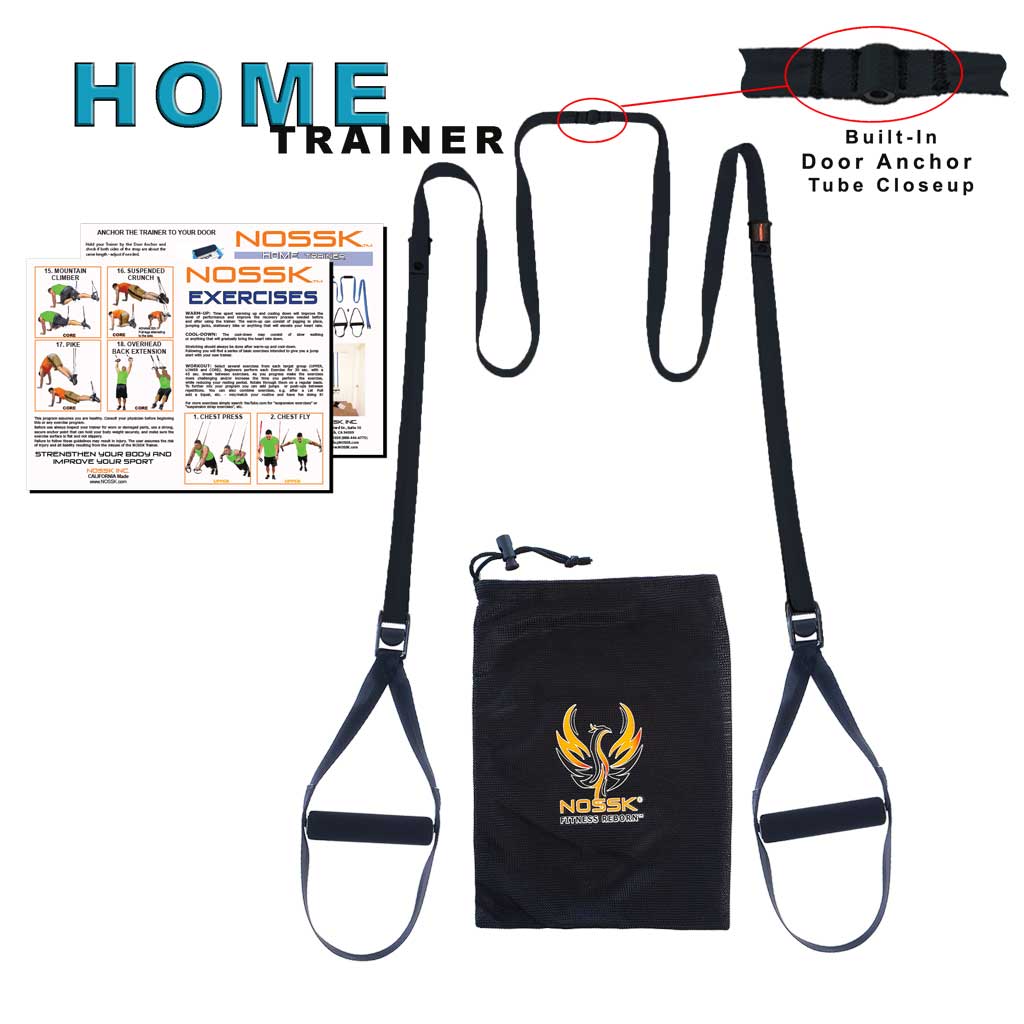
Pairing FlexEx with NOSSK suspension fitness straps gives you a practical setup for hands, wrists, forearms, upper body, core, and lower body, without filling your home with bulky machines.
Stronger Hands, More Useful Strength
Grip strength matters because your hands are involved in so much of daily life and fitness. From carrying bags to playing music to holding onto a set of suspension fitness straps, your hands help you do the stuff you care about.
Start small. Use FlexEx during an existing part of your day. Choose the right resistance, move with control, and give your body time to adapt.
Healthy aging is a marathon, not a sprint. A few intentional repetitions today can become better strength, better confidence, and more capable movement over time.
Ready to build stronger hands and healthier joints? Grab your FlexEx Hand Exerciser today and start your simple daily grip routine!
FlexEx and grip exercises are not a substitute for medical care. If you have pain, numbness, a recent injury, or are recovering from surgery, consult your healthcare professional before beginning or progressing an exercise routine.